
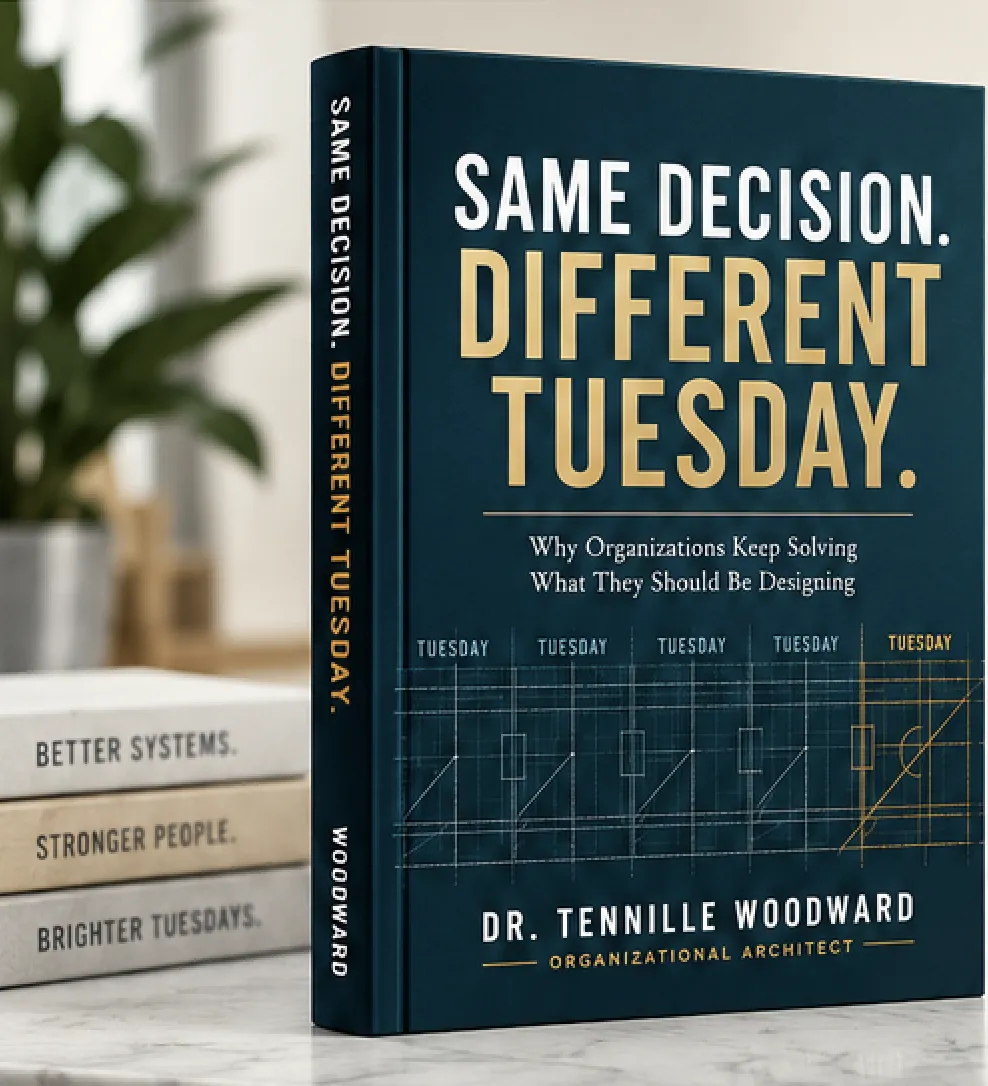
A BOOK FOR LEADERS WHO ARE READY TO DESIGN WHAT LASTS.
Why does the same problem keep coming back?
Deadlines get tighter. Expectations increase. People compensate. Leaders respond to the reaction. And then the same problem shows up again...next Tuesday...
A Better Tuesday
Is Possible.
You know this Tuesday.
The expectation gets clarified again.
The decision gets revisited. Another meeting gets scheduled.
A leader steps in to fix something the team should have been able to resolve.
Someone carries work that was never actually theirs.
Everyone works harder. And somehow, a few Tuesdays later, you are right back here.
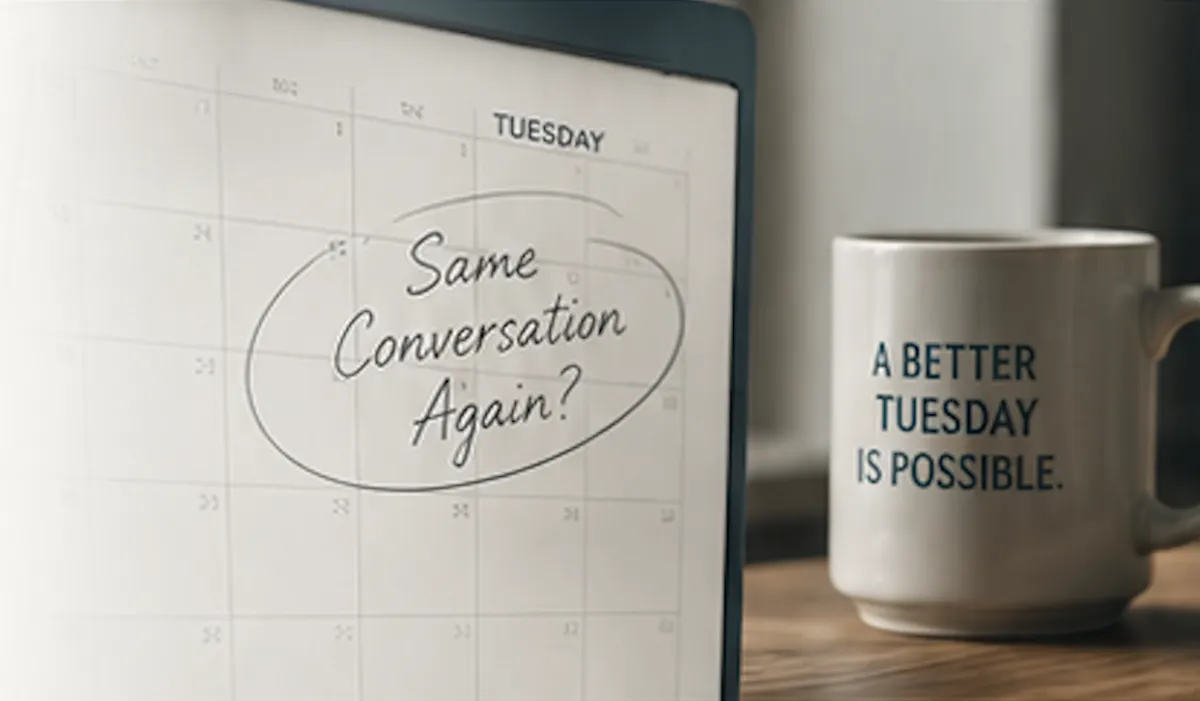
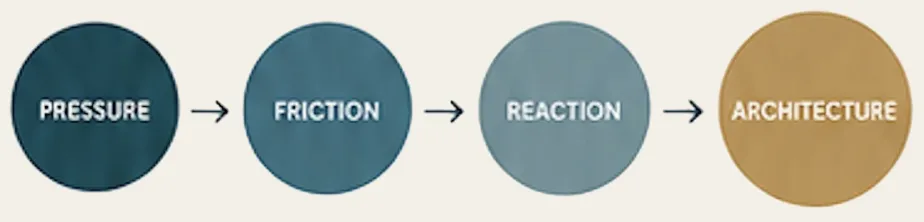
The work of an Organizational Architect is to stop treating every reaction as an isolated event and begin asking a different question:
What is the organization producing—
and what would have to be designed differently to change it?
The problem you keep solving... It may be the architecture.
Most organizations are very good at responding to what they can see.
A missed deadline...
A frustrated employee...
A communication breakdown...
An ineffective meeting...
A decision that did not stick.
But visible problems are often reactions to something underneath them.
Stop asking people to compensate for what the organization should have designed.
SEE THE SYSTEM
Recognize Human Compensation, organizational pressure, structural friction, and the patterns that make recurring problems look like people problems.
DESIGN HOW WORK OPERATES
Build the clarity, escalation pathways, alignment systems, and meeting architecture that allow people to execute without continually compensating for ambiguity.
DESIGN HOW THE ORGANIZATION LEARNS
Create the conditions for truth to surface, expectations to become shared, feedback to become useful, and learning to change what the organization does next.
Solve the problem →
Diagnose the pattern
Carry the work →
Design how the work is carried
Fix Tuesday →
Design a better Tuesday
What if next Tuesday could
actually be different?
You don't need another reminder to communicate better, meet more efficiently, hold people accountable, or work harder. You need a way to see what the organization is asking people to compensate for — and the tools to design something better.
FOLLOW US


© 2026 ArchitectingExcellence™ | All Rights Reserved | Privacy Policy | Terms of Service